









Treat the Cancer.
Support the Person.
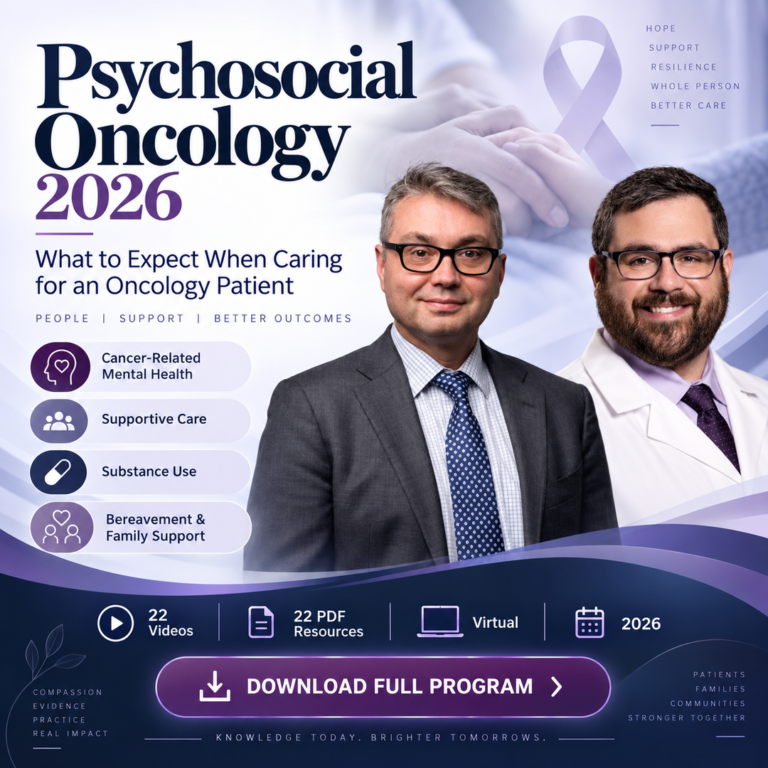
Cancer care extends far beyond diagnosis and treatment. Patients, caregivers, and families may face depression, anxiety, demoralization, substance use, difficult conversations, grief, and major psychosocial stressors throughout the cancer journey.
Diagnosis
Understand the emotional and psychological impact of a cancer diagnosis.
Treatment
Recognize mental-health and behavioral challenges during cancer therapy.
Survivorship
Address ongoing distress, adjustment, quality-of-life, and family needs.
Supportive Care
Navigate difficult interactions, support groups, and psychosocial interventions.
Bereavement
Support patients, caregivers, and families through grief and loss.
Recognize the Psychological Impact of Cancer
Explore the impact of cancer on patients, caregivers, and families, with practical attention to depression, anxiety, demoralization, distress, quality of life, and psychosocial functioning.
The Conversations That Are Often Hardest
The program also addresses behavioral health, emerging supportive approaches, communication challenges, grief, and the needs of special oncology populations.
Substance Use Disorders
Understand substance-related challenges in the context of cancer care.
Psychedelics & Cannabis
Explore their evolving role and considerations within oncology supportive care.
Challenging Interactions
Develop a more structured approach to difficult patient and family encounters.
Bereavement & Support Groups
Review strategies for supporting patients, caregivers, families, and groups.
Psychosocial Care Across Different Patient Needs
Examine psychosocial oncology considerations across young adults, pediatric populations, caregivers, and families.
What This Program Helps You Address
Recognize common psychological and social challenges experienced by people living with cancer.
Review approaches to depression, anxiety, demoralization, and related concerns.
Understand how cancer affects patients, caregivers, families, and support networks.
Explore substance use, difficult interactions, and other complex psychosocial scenarios.
Strengthen supportive-care approaches for grief, loss, and family needs.
Integrate psychological and supportive considerations into broader oncology care.
Clinicians Caring for People With Cancer
Particularly relevant for oncology professionals, psychiatrists, psychologists, primary care clinicians, social workers, and other healthcare professionals involved in cancer care and supportive services.
Psychiatrists
Psychologists
Social Workers
Primary Care

Reviews
There are no reviews yet.