
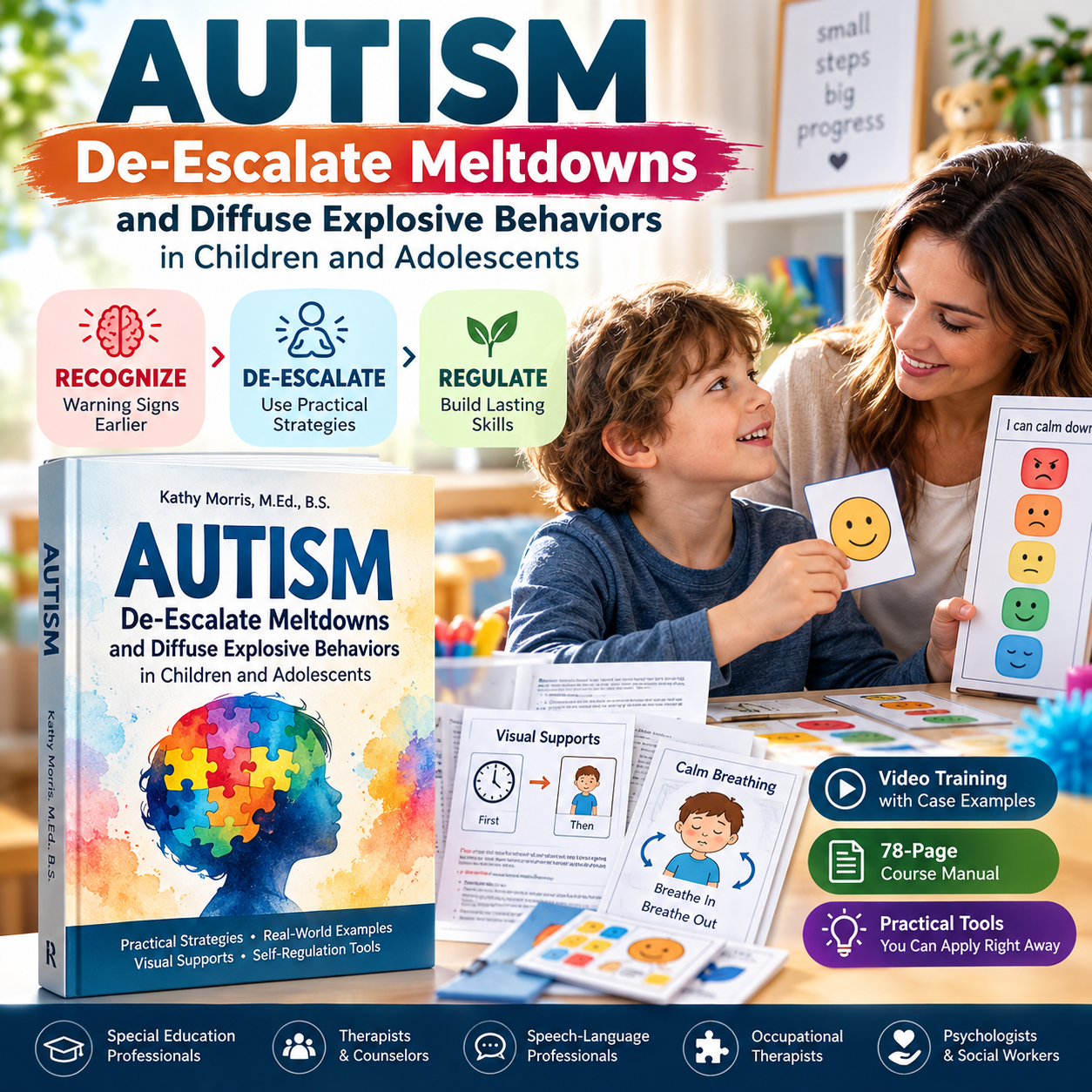







Autism: De-Escalate Meltdowns & Diffuse Explosive Behaviors
Learn practical ways to recognize escalation earlier, respond to sensory
and behavioral challenges, support self-regulation, and teach meaningful
replacement behaviors before a difficult moment becomes a full meltdown.
Sensory Strategies
Visual Supports
Self-Regulation
Effective intervention starts with understanding what is driving the behavior —
including sensory overload, difficulty with change, communication challenges,
executive-function demands, and loss of self-regulation.
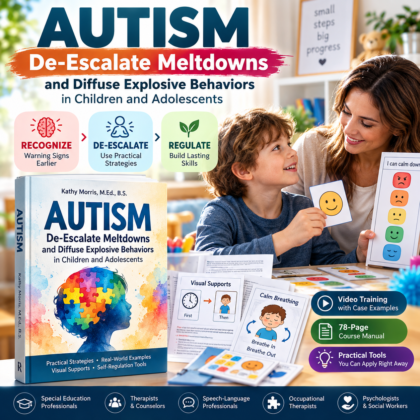
Recognize → De-Escalate → Regulate
Differentiate tantrums from meltdowns, recognize stages of escalation,
and consider whether sensory or behavioral factors are contributing.
Explore sensory tools, transition supports, visual cues,
schedule-change strategies, and other approaches designed to reduce escalation.
Teach self-monitoring, emotional communication, predictable routines,
and more appropriate ways to respond when challenges arise.
More Than Theory — Tools You Can Apply
Kathy Morris demonstrates practical interventions through
case examples and hands-on strategies designed for real-world
therapy, education, and behavioral-support environments.
Practical Tools for Regulation, Communication & Behavior
Is It Behavior — or Sensory Overload?
Explore ways to recognize overstimulation and structure
environments more intentionally to support regulation,
attention, predictability, and learning.
Use practical supports designed to help reduce overstimulation.
Create clearer routines and environments for therapy and learning.
Convert verbal expectations into more accessible visual information.
Help Build Skills Before the Next Difficult Moment
Explore tools for self-monitoring, emotional awareness,
visual planning, communication, and self-management that can
support more effective responses over time.
Increase Predictability, Attention & Organization
Learn how visual reminders, high-interest areas, music,
structured routines, and visual organization can support
engagement and executive functioning.
What Happens Next Matters Too
Explore ways to review difficult situations once calm has returned,
reinforce communication, provide systematic feedback,
and identify more appropriate responses for future situations.
Kathy Morris, M.Ed., B.S.
Kathy Morris has more than four decades of experience working with
children and adolescents with significant behavioral challenges,
including autism, ADHD, and executive-functioning differences.
Her professional background includes teaching, speech therapy,
behavioral consultation, diagnostic and supervisory roles,
family support, and work with multidisciplinary professionals.
For Professionals Supporting Autistic Children & Adolescents
78-Page Autism Meltdowns Manual
The course includes the supporting manual
Autism Meltdowns in Children and Adolescents.
Respond Earlier. Support Regulation More Effectively.
Explore practical strategies for sensory overload,
communication, visual support, executive functioning,
self-regulation, escalation, and post-meltdown learning.


Reviews
There are no reviews yet.