
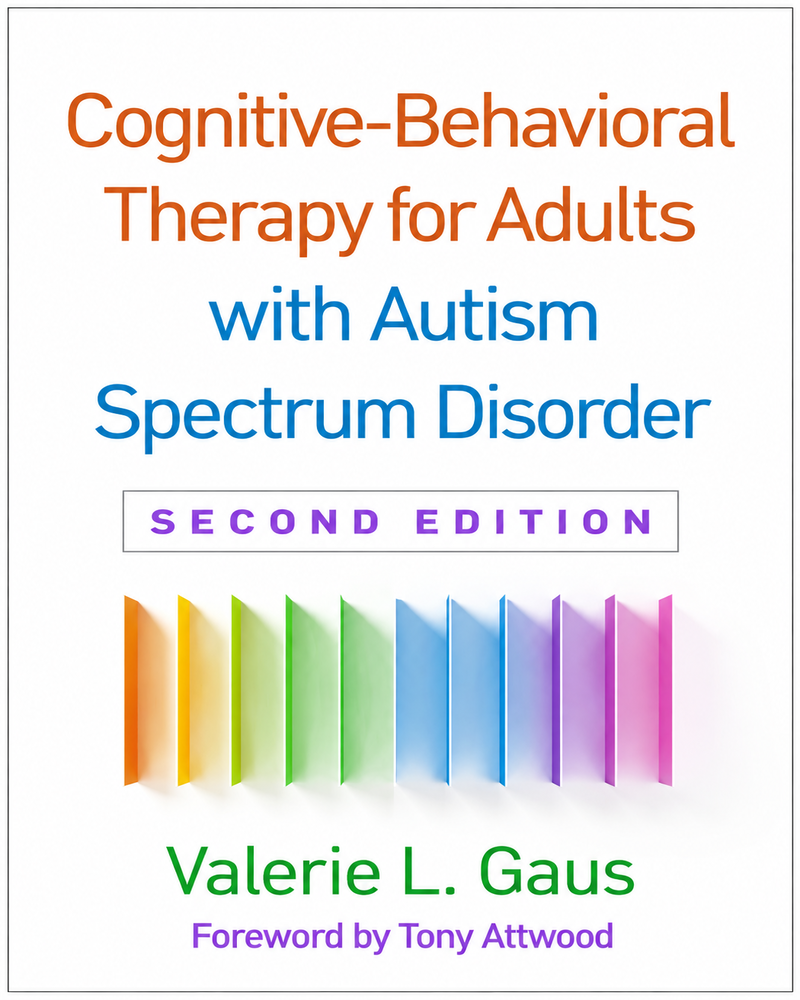




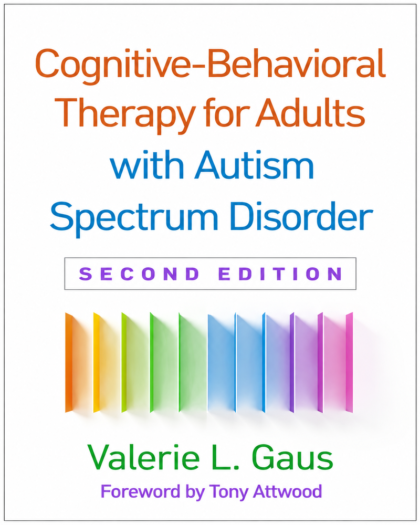
Cognitive-Behavioral Therapy for Adults with Autism Spectrum Disorder
Valerie L. Gaus provides a clinically focused framework for adapting
cognitive-behavioral therapy to autistic adults without significant
cognitive or language impairment — with guidance on case formulation,
anxiety, depression, coping, social functioning, self-acceptance,
and emotion regulation.
Adult Autism
Clinical Formulation
Second Edition
This book focuses on how information-processing differences associated
with autism can shape assessment, case conceptualization,
treatment planning, and the delivery of cognitive-behavioral interventions.
Make CBT More Responsive to Autistic Adult Clients
Cognitive-Behavioral Therapy for Adults with Autism Spectrum Disorder
is a specialized resource for psychotherapists working with autistic adults
who do not have significant cognitive or language impairments.
Valerie L. Gaus shows how established CBT methods can be adapted
to better fit autistic patterns of information processing,
emotional regulation, social functioning, and coping.
Detailed clinical examples help connect theory to practice,
while the second edition integrates updated research,
assessment approaches, terminology, and intervention strategies.
From Conceptualization to Intervention
Examine how autism-related information-processing differences
may shape the way problems are experienced and expressed.
Conceptualize presenting difficulties within the context
of autism rather than applying a generic CBT formulation.
Modify intervention style, pacing, communication,
and skill-building to improve therapeutic fit.
Apply tailored strategies to anxiety, depression,
coping difficulties, social functioning, and self-acceptance.
Adapt the Therapy — Not the Client to the Therapy
The emphasis is on preserving the evidence-based principles
of CBT while adjusting intervention delivery to better match
the client’s cognitive, emotional, social, and communication profile.
Apply tailored CBT approaches to anxiety and related avoidance.
Address mood difficulties while accounting for autism-specific context.
Build practical skills without reducing treatment to simple social conformity.
Support a more constructive understanding of identity,
differences, strengths, and personal needs.
See the Clinical Reasoning in Practice
Detailed case examples illustrate how autism-informed CBT
formulation and intervention can be applied across real clinical
problems, helping bridge conceptual knowledge and psychotherapy practice.
Understand How Information-Processing Differences Matter
The book is grounded in contemporary knowledge about information
processing in autism, helping clinicians understand why a standard
intervention may need modification and which aspects of therapy
may benefit from greater structure, clarity, or adaptation.
Updated for Contemporary Autism Practice
Integrate Mindfulness-Based Strategies
The expanded edition includes mindfulness-based approaches
designed to support emotion-regulation work as part of a broader
autism-informed CBT framework.
Specialized Guidance Beyond Generic CBT
Built for Clinicians Working With Autistic Adults
A focused clinical resource for professionals who want to
deliver more individualized, autism-informed psychotherapy.
Adapt CBT With Greater Clinical Precision
Explore autism-informed case formulation, adapted CBT interventions,
anxiety and depression treatment, mindfulness,
social and coping skills, assessment, and detailed clinical examples.


Reviews
There are no reviews yet.